6 Critical Steps to Identify Houseplant Pests
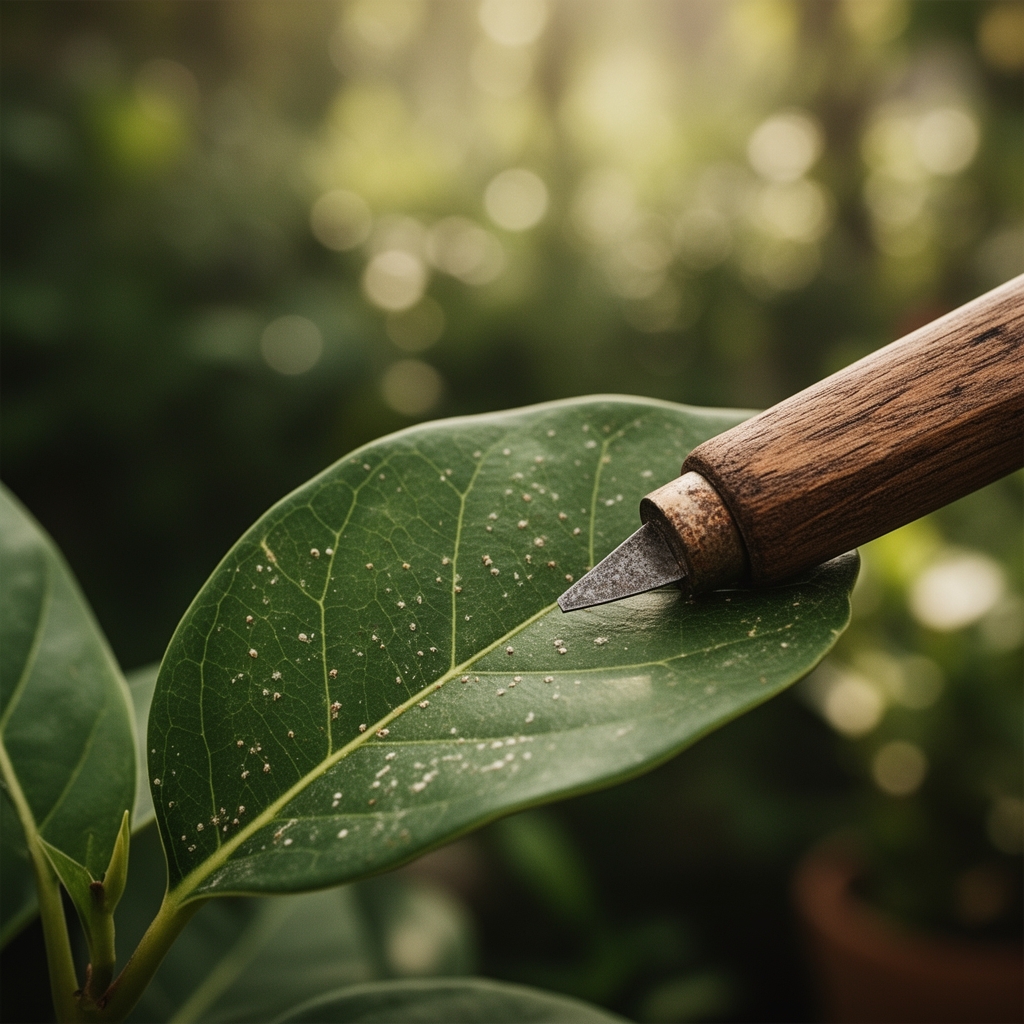
The first white flecks on a fiddle-leaf fig often go unnoticed until an infestation has colonized three nodes of new growth. By the time yellowing appears, piercing-sucking insects may have established reproductive colonies numbering in the hundreds. Executing accurate steps for identifying common houseplant pests prevents economic loss, preserves photosynthetic efficiency, and eliminates the need for broad-spectrum treatments that disrupt beneficial arthropod populations. Early detection hinges on systematic observation protocols that examine both foliar surfaces and substrate interfaces where cryptic species shelter during daylight hours.
Materials
Successful pest identification requires specialized tools that function across varied light spectrums and magnification ranges. Acquire a 10x jeweler's loupe with built-in LED illumination for examining trichome damage and egg clutch morphology. Yellow sticky traps measuring 3 by 5 inches intercept flying adults and reveal population density through trap index counts. Isopropyl alcohol at 70 percent concentration serves as both a killing agent for specimen collection and a rapid knockdown spray for isolated infestations.
For substrate assessment, use a soil pH meter calibrated to the 4.5 to 7.5 range, since nutrient imbalances often predispose plants to pest pressure. Maintain a balanced organic fertilizer at 4-4-4 NPK to support cellular integrity without triggering excessive tender growth that attracts aphids. Neem oil formulations standardized to 0.9 percent azadirachtin provide both contact and systemic modes of action. Spinosad suspensions derived from Saccharopolyspora spinosa offer OMRI-listed control for lepidopteran larvae and thrips with minimal impact on predatory mite populations.
Document findings with a smartphone macro lens attachment capable of resolving structures below 0.5 millimeters. Keep reference cards illustrating diagnostic features of mealybugs, scale insects, spider mites, fungus gnats, thrips, and whiteflies within arm's reach of inspection zones.
Timing
Pest identification protocols operate independently of USDA Hardiness Zones, since houseplants inhabit controlled environments where temperature and photoperiod remain artificially stable. However, indoor populations surge during specific seasonal windows. Spider mite reproduction accelerates when indoor relative humidity drops below 40 percent, typically occurring between November and March in heated northern residences. Fungus gnat emergence peaks in late winter when overwatering combines with reduced evapotranspiration rates.
Conduct weekly inspections during the active growing season from April through September, when auxin distribution drives rapid cell division and attracts phloem-feeding insects. Scale crawlers emerge synchronously 10 to 14 days after egg hatch, making mid-spring and late summer critical intervention windows. Thrips populations explode during dry spells when outdoor migration from agricultural fields introduces gravid females through window screens.
Phases

Step One: Establish Baseline Conditions
Photograph each specimen under standardized lighting at acquisition. Note natural leaf texture, color variation, and trichome density on abaxial surfaces. Record substrate moisture using a tensiometer calibrated to centibars of tension. Healthy plants exhibit consistent internode length and uniform chlorophyll distribution. Deviations from this baseline signal stress factors that may include pest activity or cultural errors affecting cation exchange capacity.
Pro-Tip: Quarantine new acquisitions for 21 days in an isolated area with dedicated tools. This interval exceeds the egg-to-adult cycle of most common pests, allowing cryptic infestations to become visually apparent before introduction to main collections.
Step Two: Conduct Systematic Visual Surveys
Examine growing tips first, since meristematic tissue attracts aphids and thrips seeking amino acid-rich phloem sap. Inspect nodes and petiole axils where mealybugs shelter within protective wax secretions. Flip leaves to survey abaxial surfaces, the preferred oviposition site for whiteflies and spider mites. Use the jeweler's loupe to distinguish stippling patterns: spider mites create chlorotic flecks measuring 0.3 to 0.5 millimeters, while thrips produce elongated silver scars parallel to vascular bundles.
Check the substrate surface for fungus gnat larvae, visible as translucent 5-millimeter organisms in the top 2 inches of growing medium. Scale insects appear as immobile brown or tan hemispheres adhered to stems and primary veins, often accompanied by sooty mold growth on honeydew deposits.
Pro-Tip: Conduct inspections during morning hours when pest metabolic activity peaks and mobile species occupy exposed feeding sites rather than cryptic refugia.
Step Three: Deploy Monitoring Traps
Position yellow sticky cards at canopy height, securing them to bamboo stakes inserted 2 inches from the pot rim. Replace traps every 7 days and count trapped specimens using a systematic grid overlay. Trap index values above 5 adults per card per week indicate established populations requiring intervention. Blue sticky cards selectively attract thrips due to their spectral sensitivity in the 400 to 500 nanometer range.
Pro-Tip: Document trap counts in a spreadsheet that correlates population trends with environmental variables including temperature, humidity, and recent irrigation events. This data reveals predictive patterns for species-specific outbreaks.
Step Four: Collect Specimens for Identification
Use soft forceps to transfer suspected pests into vials containing 70 percent isopropyl alcohol. This concentration preserves morphological features essential for taxonomic determination while preventing tissue distortion. Label vials with collection date, host plant species, and location on the plant.
Compare specimens against reference images emphasizing diagnostic characteristics: mealybugs display filamentous wax projections; scale insects possess hardened dorsal shields; spider mites bear eight legs and paired eyespots; thrips exhibit asymmetrical mouthparts and feathered wing margins.
Pro-Tip: Contact university extension services for free or low-cost identification services when morphological features remain ambiguous. Accurate species determination ensures appropriate biological control selection.
Step Five: Assess Damage Patterns
Distinguish between pest injury and physiological disorders by examining symptom distribution. Spider mite damage appears as bronzing concentrated along primary veins where feeding aggregations occur. Thrips create linear streaking that follows cell boundaries. Aphid colonies produce distorted new growth due to saliva-borne auxin disruptors. Scale feeding induces chlorotic halos surrounding each insect.
Root-zone pests including fungus gnat larvae cause wilting symptoms despite adequate substrate moisture, since larval feeding severs fine root hairs responsible for water uptake. Measure soil electrical conductivity to rule out salt accumulation from excessive fertilization, which mimics pest stress.
Pro-Tip: Press clear adhesive tape against suspect leaf surfaces and examine the tape under magnification. This technique captures cryptic species like eriophyid mites measuring 0.2 millimeters that evade visual detection.
Step Six: Document and Verify
Compile photographic evidence showing whole plant habit, close-up symptoms, and confirmed pest specimens at diagnostic magnification. Cross-reference findings with peer-reviewed entomological keys available through agricultural extension databases. Verify that observed pest morphology, damage patterns, and host preference align with known species profiles.
Maintain a pest logbook recording species identified, population density estimates, environmental conditions, and treatment outcomes. This longitudinal data improves diagnostic speed for recurring issues and reveals correlations between cultural practices and pest incidence.
Pro-Tip: Preserve voucher specimens in archival alcohol for seasonal reference. Mealybug and scale morphology varies between instars, making developmental series valuable for training visual pattern recognition.
Troubleshooting
Symptom: Stippled yellow dots covering leaf surfaces with fine webbing visible at nodes.
Solution: Spider mites (Tetranychus urticae). Increase relative humidity above 50 percent to suppress reproduction. Apply horticultural oil at 2 percent concentration, ensuring complete coverage of abaxial surfaces. Release predatory mites (Phytoseiulus persimilis) at 10 per infested plant for biological suppression.
Symptom: White cottony masses accumulating in leaf axils and along stems.
Solution: Mealybugs (Pseudococcidae family). Apply isopropyl alcohol directly to colonies using cotton swabs for small infestations. For widespread colonization, drench with systemic imidacloprid at labeled rates, recognizing a 21-day interval to adult mortality. Introduce parasitoid wasps (Leptomastix dactylopii) for long-term biological control.
Symptom: Clouds of tiny white insects erupting when foliage is disturbed.
Solution: Whiteflies (Bemisia tabaci or Trialeurodes vaporariorum). Install yellow sticky traps at 1 per 5 square feet of growing area. Spray insecticidal soap at 2 percent concentration every 5 days for 3 weeks to disrupt reproductive cycles. Vacuum adults during early morning when cold temperatures reduce mobility.
Symptom: Small black flies hovering near substrate surface with visible larvae in growing medium.
Solution: Fungus gnats (Sciaridae family). Allow substrate to dry to 2 inches depth between irrigation events, disrupting larval development. Apply Bacillus thuringiensis subspecies israelensis (Bti) as a drench at 0.5 ounces per gallon. Top-dress with 0.5 inches of horticultural sand to prevent oviposition access.
Symptom: Elongated silver streaks on leaves with distorted flowers and blackened fecal deposits.
Solution: Thrips (Thysanoptera order). Deploy blue sticky cards for monitoring. Spray spinosad at 4 to 6 fluid ounces per gallon, targeting early morning applications when thrips occupy exposed feeding sites. Release minute pirate bugs (Orius insidiosus) at 1 per square foot for sustained biological pressure.
Maintenance
After pest elimination, implement cultural practices that reduce reinfestation risk. Water only when tensiometer readings exceed 20 centibars of tension, preventing substrate saturation that promotes fungus gnat proliferation. Maintain air circulation using oscillating fans set to deliver 200 cubic feet per minute, disrupting the boundary layer where spider mites thrive.
Apply foliar sprays of 1 tablespoon kelp extract per gallon every 14 days to enhance cuticle thickness and improve natural pest resistance. Fertilize using a diluted 4-4-4 organic blend at one-quarter strength weekly rather than full-strength monthly applications, avoiding the nitrogen flushes that produce succulent growth attractive to aphids.
Inspect plants every 7 days using the systematic protocol established during initial identification phases. Clean leaf surfaces monthly with a damp microfiber cloth to remove dust that harbors mite eggs and impairs photosynthetic efficiency. Prune damaged foliage at a 45-degree angle 0.25 inches above healthy nodes to eliminate pest refugia while promoting auxin redistribution to lateral buds.
Inoculate root zones with mycorrhizal fungi at transplanting to enhance phosphorus uptake and improve drought tolerance, reducing plant stress that predisposes specimens to pest attack. Maintain substrate pH between 6.0 and 6.8 to optimize nutrient availability and cellular integrity.
FAQ
How quickly can pest populations establish on houseplants?
Under optimal conditions of 75 degrees Fahrenheit and low humidity, spider mites complete their lifecycle in 7 days, producing exponential population growth. A single gravid female aphid births 5 live nymphs daily for 30 days. Early detection within the first reproductive cycle prevents economic injury levels.
Can beneficial insects survive indoors for pest control?
Predatory mites, parasitoid wasps, and lacewing larvae establish in indoor environments when host prey densities remain sufficient. Provide supplemental pollen sources and maintain humidity above 40 percent to support natural enemy survival between pest outbreaks.
Do organic pesticides eliminate the need for pest identification?
No. Neem oil disrupts soft-bodied insects but proves ineffective against scale insects protected by waxy shields. Bti targets only dipteran larvae, leaving thrips and mites unaffected. Accurate identification ensures treatment selection matches pest biology.
What environmental factors trigger indoor pest outbreaks?
Relative humidity below 40 percent accelerates spider mite reproduction. Overwatering combined with poor drainage creates ideal fungus gnat habitat. Excessive nitrogen fertilization produces tender growth with reduced lignin content, attracting phloem-feeders.
Should infested plants be discarded immediately?
Most infestations respond to targeted treatment when detected early. Discard only specimens with systemic infections or pest loads exceeding 50 percent leaf coverage. Quarantine treated plants for 30 days to verify elimination before reintegration with healthy collections.