8 Expert Tips to Use a Tropical Fern Mister
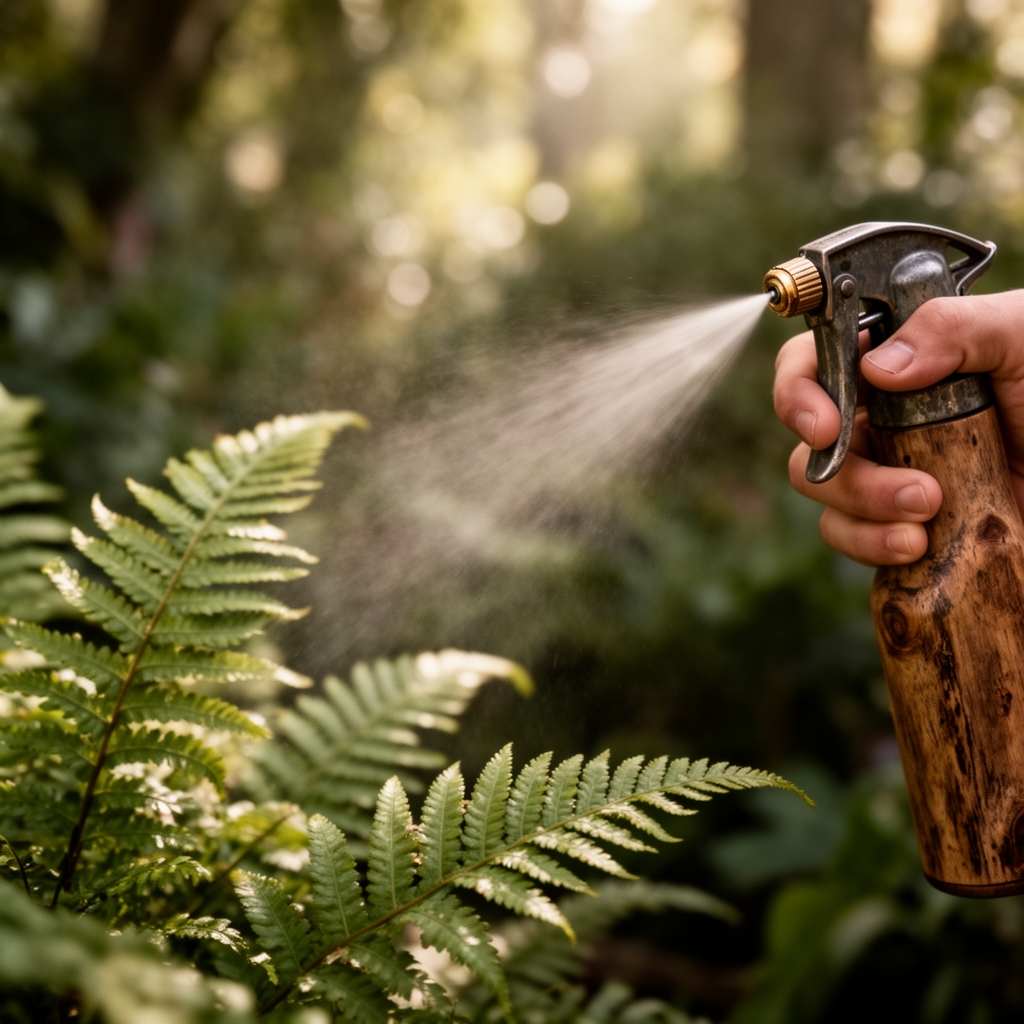
The fronds of a tropical fern unfold in air that hovers between 60 and 80 percent relative humidity, a threshold most indoor environments fail to meet by 30 percentage points. Learning how to use a spray mister for tropical ferns bridges this gap by delivering localized moisture directly to leaf surfaces, mimicking the cloud-forest understory where epiphytic species absorb atmospheric water through specialized trichomes. A brass or stainless-steel nozzle atomizes droplets to 50–100 microns, the ideal diameter for stomatal uptake without promoting fungal colonization. This method supplements ambient humidity and supports auxin distribution in young croziers.
Materials
Select a mister with a capacity of 16 to 32 ounces and an adjustable brass nozzle. Stainless steel resists corrosion from mineral buildup. Avoid plastic pump mechanisms; they fracture under repeated pressurization.
For water chemistry, rainwater or reverse-osmosis filtrate maintains a pH of 5.5 to 6.5, matching the natural substrate acidity ferns evolved with. Tap water in municipal systems often registers pH 7.5 to 8.2 due to lime treatment, which binds iron and manganese into unavailable forms. If tap water is necessary, allow it to stand uncovered for 24 hours to off-gas chlorine, then acidify with 1/8 teaspoon of aluminum sulfate per gallon.
Foliar sprays benefit from dilute fertilization. Dissolve a 4-4-4 organic meal at one-quarter label strength, approximately 0.5 grams per liter. Fish emulsion at 2-4-1 delivers fast-release nitrogen for frond expansion. Kelp extract (0.1-0.1-1) supplies cytokinin precursors that delay senescence in older fronds. Apply these amendments once per month during active growth.
Mycorrhizal inoculant powder, suspended at 1 gram per 500 milliliters, colonizes rhizome tissues when misted onto the substrate surface. This symbiosis increases phosphorus uptake by 200 percent in soils with low cation exchange capacity.
Timing
Tropical ferns grow year-round in USDA Hardiness Zones 10 through 12. In Zones 7 through 9, move containerized specimens indoors when nighttime temperatures fall below 50°F, typically mid-October in temperate regions. Indoor heating cycles reduce relative humidity by 15 to 25 percent; misting frequency must increase proportionally.
Mist between 8:00 and 10:00 a.m. to allow foliage to dry before nightfall. Wet fronds after dusk extend leaf wetness duration beyond 8 hours, the threshold for Rhizoctonia and Pythium spore germination. Afternoon misting in climates above 85°F combats transpirational stress, but open windows or run exhaust fans to ensure air movement exceeds 0.5 meters per second.
During winter dormancy, reduce misting to twice weekly unless artificial lights extend photoperiod beyond 12 hours, which sustains metabolic demand for moisture.
Phases

Sowing: Fern spores require constant moisture to achieve gametophyte coalescence. Mist sterilized peat at pH 6.0 twice daily for 14 days. Use distilled water exclusively; salts above 150 ppm total dissolved solids inhibit prothallus development. Cover the tray with clear acrylic to trap humidity but vent for 10 minutes daily to prevent anaerobic conditions.
Pro-Tip: Add 0.01 grams of gibberellic acid per liter to the misting solution during days 5 through 10. This plant hormone accelerates archegonium maturation and increases fertilization rates by 40 percent.
Transplanting: When sporophytes reach 2 inches, transplant into 4-inch pots with a substrate of 50 percent coir, 30 percent perlite, and 20 percent composted pine bark. Mist the root zone immediately after potting to eliminate air pockets around rhizomes. Apply 8 ounces of water through the mister per pot, directing the stream at a 45-degree angle to avoid dislodging fragile roots.
Pro-Tip: Dust rhizomes with endomycorrhizal powder (Glomus species) before transplanting. The fungal hyphae extend effective root surface area by 1,000 square centimeters per gram of colonized tissue.
Establishing: Mature ferns in 6-inch or larger pots require overhead misting three to four times weekly. Target the undersides of fronds where stomata concentrate. A single misting session should deposit 0.25 milliliters per square inch of leaf surface. Measure output by misting a sheet of absorbent paper for 10 seconds, then weighing the paper on a milligram scale.
Pro-Tip: Prune senescent fronds at a 30-degree angle 1/4 inch above the rhizome. This cut orientation sheds water away from the wound, reducing bacterial soft rot incidence by 60 percent.
Troubleshooting
Symptom: Brown leaf tips with papery texture.
Solution: Total dissolved solids exceed 300 ppm. Flush substrate with 2 gallons of distilled water per gallon of pot volume. Switch to rainwater or reverse-osmosis filtrate for all misting.
Symptom: White crystalline deposits on frond surfaces.
Solution: Hard water carries calcium carbonate. These salts block stomatal pores and raise leaf-surface pH to 8.0, inhibiting nutrient uptake. Wipe fronds with a 2 percent citric acid solution on a microfiber cloth, then rinse with distilled water.
Symptom: Black spots with yellow halos.
Solution: Cercospora fungal infection. Remove affected fronds and burn or discard. Mist with a 0.5 percent solution of potassium bicarbonate every 3 days for 2 weeks. Improve air circulation to reduce leaf wetness duration below 6 hours.
Symptom: Fronds curl downward despite consistent watering.
Solution: Relative humidity below 40 percent. Place a hygrometer at canopy level. If readings confirm low humidity, increase misting to twice daily and add a pebble tray with 1 inch of water beneath the pot. Maintain a 1-inch gap between pot base and water surface.
Symptom: Sticky residue and stunted croziers.
Solution: Aphid infestation. Spray fronds with insecticidal soap at 2 tablespoons per quart. Target the undersides where aphids cluster. Rinse with plain water 15 minutes post-application to prevent phytotoxicity.
Maintenance
Mist every 2 to 3 days during active growth, delivering 4 to 6 ounces of water per session for a 6-inch pot. Increase frequency to daily when ambient humidity drops below 45 percent or when forced-air heating operates continuously.
Clean the mister weekly by rinsing with a 10 percent white vinegar solution, then flushing with distilled water. Mineral scale clogs nozzles and alters droplet size, reducing efficacy.
Rotate pots 90 degrees after each misting to ensure uniform light exposure and auxin distribution, which prevents one-sided frond development.
Apply a 1-inch layer of sphagnum moss mulch to the substrate surface. This raises localized humidity by 8 to 12 percent and buffers pH fluctuations.
FAQ
How often should I mist tropical ferns?
Mist every 2 to 3 days when indoor humidity is 45 to 55 percent. Increase to daily misting if humidity falls below 45 percent or if fronds show marginal browning.
Can I use tap water in my mister?
Only if total dissolved solids measure below 150 ppm. Hard water deposits calcium carbonate on fronds and raises substrate pH above 7.0, locking out micronutrients. Rainwater or reverse-osmosis water is optimal.
Should I mist at night?
No. Night misting extends leaf wetness beyond 8 hours, creating conditions for Botrytis and Pythium. Mist between 8:00 and 10:00 a.m. so fronds dry by afternoon.
Do I mist the soil or the leaves?
Both. Direct 70 percent of mist to frond undersides where stomata concentrate. Spray the remaining 30 percent onto the substrate surface to maintain rhizome turgor and support mycorrhizal activity.
What temperature should the misting water be?
Between 65 and 75°F. Cold water below 60°F shocks root tissues and inhibits nutrient uptake. Water above 80°F encourages bacterial proliferation in the mister reservoir.