6 Essential Steps for Fertilizing Indoor Plants
Spring light floods windowsills and accelerates chlorophyll production in foliage houseplants, demanding strategic nutrient replenishment after winter dormancy. Indoor plants metabolize faster as photoperiods lengthen, depleting nitrogen reserves in potting media. The steps for fertilizing indoor plants in spring begin with soil testing and end with careful monitoring of new growth, ensuring that auxin distribution supports lateral branching rather than spindly vertical extension.
Materials
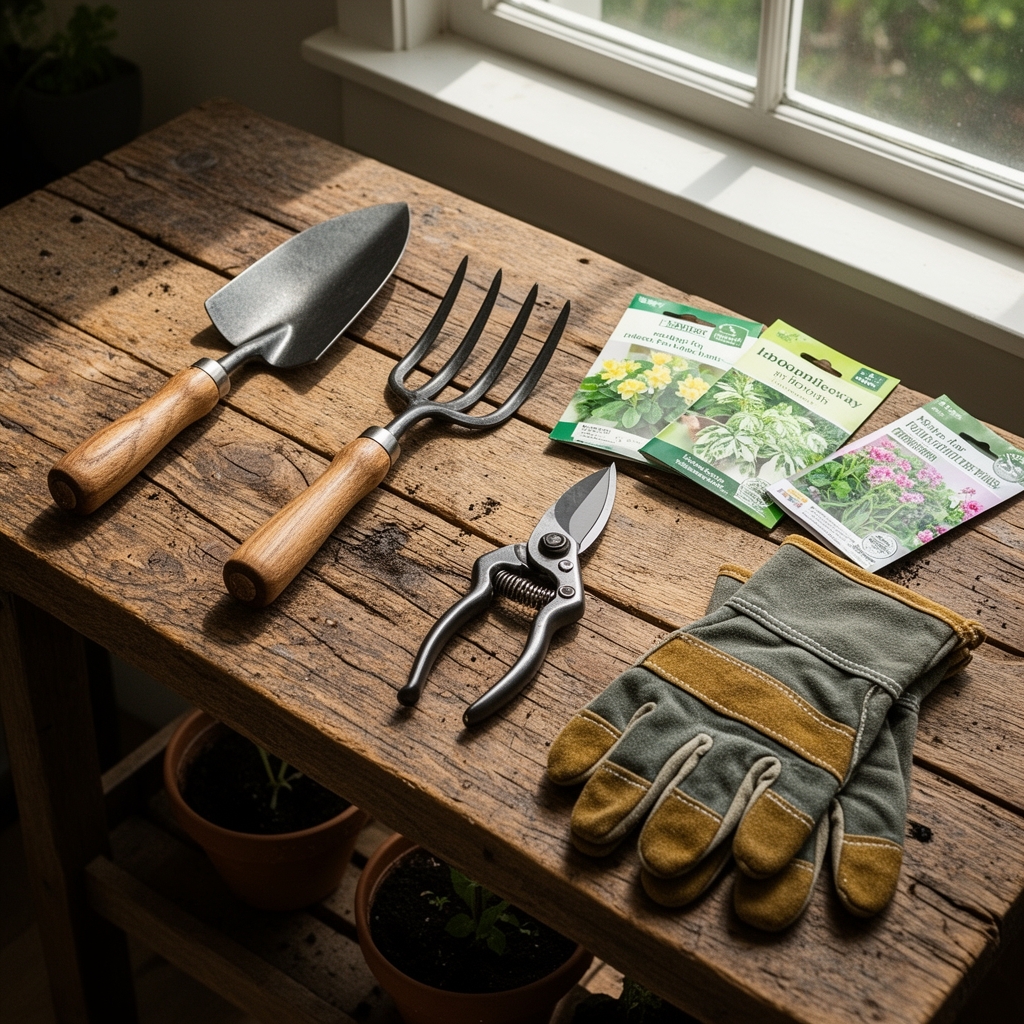
Gather a pH meter with 0.1 precision, a calibrated measuring spoon set, and distilled water for dilution. Choose a water-soluble fertilizer with a balanced NPK ratio of 10-10-10 for foliage specimens like Epipremnum aureum and Ficus elastica. Flowering varieties such as Spathiphyllum and Schlumbergera benefit from higher phosphorus formulations like 5-10-5, applied beginning six weeks before expected bloom. Organic options include fish emulsion at 5-1-1, suitable for acid-loving species with target soil pH between 5.5 and 6.5. Kelp meal provides trace elements including boron and manganese that synthetic blends often omit. Granular slow-release pellets rated 14-14-14 work for large-container specimens over 10 gallons, releasing nutrients through cation exchange over 90 to 120 days. Purchase mycorrhizal inoculant powder containing Glomus intraradices to enhance phosphorus uptake in newly potted specimens.
Timing
Begin fertilization when average indoor daylight reaches 12 hours, typically corresponding to outdoor last-frost dates in your hardiness zone. For USDA Zone 7, this window opens between April 10 and April 20. Zone 5 gardeners should wait until April 25 to May 5, while Zone 9 residents can start as early as March 15. Indoor plants register seasonal shifts through red-to-far-red light ratios penetrating window glass, triggering phytochrome responses that increase metabolic demand. Avoid fertilizing newly purchased plants for 30 days, as commercial nurseries saturate root zones with high-salt feeds that can cause tip burn if supplemented prematurely. Resume feeding only after the plant has adapted to your specific light and humidity conditions.
Phases

Sowing Phase
For propagation from stem cuttings, withhold fertilizer until roots reach 2 inches in length. Premature feeding diverts energy to foliage at the expense of root establishment. Once roots show tertiary branching, apply a quarter-strength solution of 3-1-2 formulation every 14 days. Rooting hormone containing 0.1% indole-3-butyric acid accelerates adventitious root formation in woody cuttings from Dracaena and Ficus.
Pro-Tip: Dust cutting wounds with powdered sulfur before inserting into sterile vermiculite to prevent Pythium damping-off during the critical root-initiation window.
Transplanting Phase
Repot rootbound specimens into containers 2 inches larger in diameter than the previous vessel. Mix 10% perlite and 5% coarse sand into peat-based potting mix to improve cation exchange capacity and prevent compaction. Water thoroughly with plain water 24 hours before first feeding to prevent osmotic shock to damaged root hairs. Apply half-strength fertilizer at 1 teaspoon per gallon seven days post-transplant. Avoid disturbing the root ball's outer 0.5 inches, where mycorrhizal hyphae concentrate.
Pro-Tip: Inoculate the new potting mix with 1 tablespoon of mycorrhizal powder per 4-quart volume, mixing it directly into the root zone rather than broadcasting on the surface.
Establishing Phase
Transition to full-strength feeding once new leaves reach 50% of mature size, approximately 21 to 28 days post-transplant. Feed every 10 to 14 days during active growth from March through September. Reduce frequency to every 28 days from October through February as photoperiods shorten. Monitor electrical conductivity of drainage water; readings above 2.0 mS/cm indicate salt accumulation requiring leaching with 2 gallons of plain water per gallon of pot volume.
Pro-Tip: Prune terminal buds at a 45-degree angle just above a node to redirect auxin flow into lateral meristems, producing bushier growth in species like Coleus and Tradescantia.
Troubleshooting
Symptom: Interveinal chlorosis in new leaves with green veins remaining distinct.
Solution: Iron deficiency caused by alkaline pH above 7.0. Drench soil with chelated iron at 1 tablespoon per gallon. Amend future waterings with sulfur to lower pH to 6.0-6.5.
Symptom: Brown leaf margins with yellow halos, progressing from older to younger foliage.
Solution: Potassium deficiency or salt burn. Flush soil with distilled water. Resume feeding at half strength with formulations containing at least 5% potassium.
Symptom: Stunted growth with dark green foliage and purple tinting on leaf undersides.
Solution: Phosphorus lockout from cold soil temperatures below 60°F. Relocate plant away from drafty windows. Apply phosphorus-rich 5-10-5 at full strength.
Symptom: Webbing on leaf axils with stippled yellow spotting.
Solution: Two-spotted spider mite infestation exacerbated by low humidity. Spray foliage with insecticidal soap at 5 tablespoons per gallon every 72 hours for three applications.
Maintenance
Water when the top 1 inch of soil feels dry to touch, typically every 5 to 7 days for 6-inch pots. Leach accumulated salts monthly by flushing with 1.5 gallons of water per gallon of soil volume, allowing full drainage. Wipe leaves with a damp microfiber cloth biweekly to remove dust that blocks stomata and reduces photosynthetic efficiency by up to 30%. Rotate pots 90 degrees weekly to ensure even light distribution and prevent phototropic bending. Maintain ambient temperatures between 65°F and 75°F; metabolic rates double for every 18°F increase, accelerating nutrient depletion.
FAQ
When should I stop fertilizing indoor plants?
Cease feeding when day length drops below 10 hours, usually late October in temperate zones. Winter dormancy reduces transpiration and nutrient uptake by 60%.
Can I use outdoor fertilizer indoors?
Yes, but reduce concentration to one-third strength. Outdoor formulations contain higher salt indexes unsuitable for container culture's limited leaching capacity.
How do I know if I am overfeeding?
White crust on soil surface, leaf tip necrosis, and wilting despite moist soil indicate fertilizer burn. Flush immediately with plain water.
Do succulents need spring fertilization?
Feed cacti and succulents once in April with 2-7-7 formulation at half strength. Their slow metabolism requires minimal nitrogen to prevent etiolated growth.
What causes fertilizer to smell like ammonia?
Anaerobic conditions in waterlogged soil convert nitrate to ammonia gas. Improve drainage and reduce watering frequency.