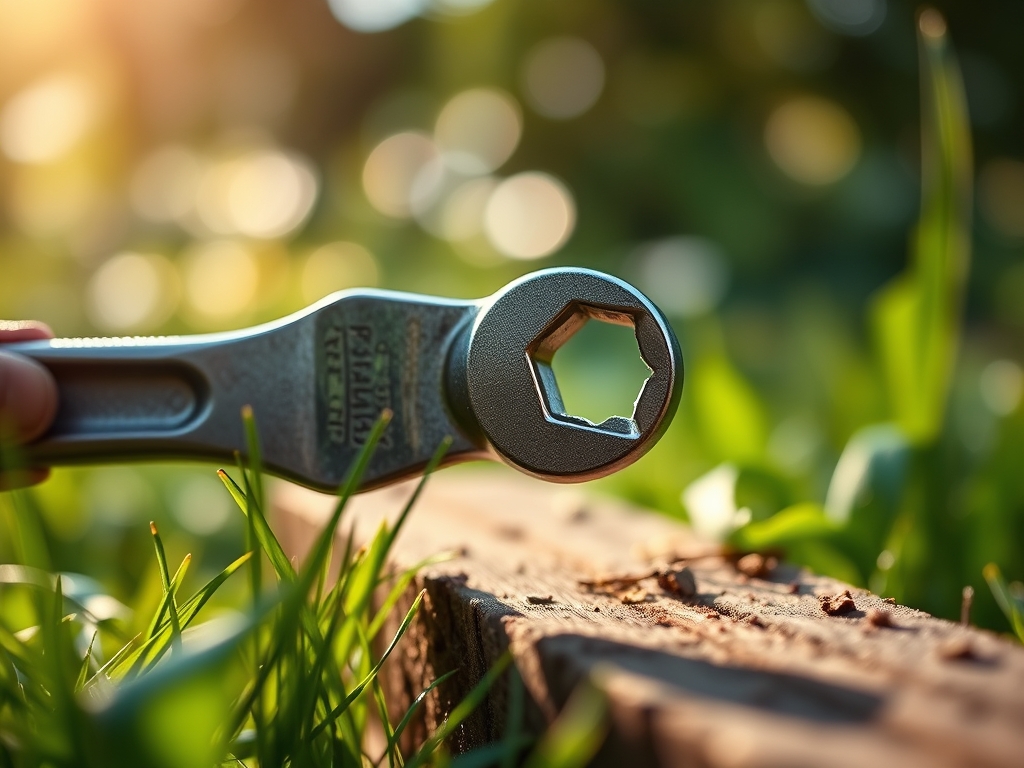
6 Pro Tips to Use a Torque Wrench for Mowers
Blade assembly bolts sheared on the second pass over thick fescue, scattering hardware across the lawn and leaving the deck assembly rattling against the chassis. The operator had tightened every fastener by feel, trusting years of muscle memory instead of calibrated torque values. Learning how to use a torque wrench for mower decks prevents catastrophic failures, extends component life, and ensures blade tip speed remains within safe operational parameters. Properly torqued fasteners maintain blade timing in multi-blade systems and prevent harmonic vibration that fractures spindle housings.
Materials

Torque wrenches for mower maintenance come in three primary types: beam-style deflection models (accurate to ±4%), micrometer-adjustable click-type (±3%), and digital electronic units (±2%). Select a wrench with a range spanning 10 to 150 foot-pounds for comprehensive deck work. Blade bolts typically require 40 to 90 foot-pounds depending on shaft diameter. Spindle housing bolts demand 20 to 45 foot-pounds, while deck mounting brackets need 25 to 55 foot-pounds.
Complementary materials include a calibration weight (25 pounds minimum), torque wrench storage case with silica gel desiccant, anti-seize compound (copper-based for ferrous threads, nickel for stainless), thread-locking fluid (medium-strength 242 for vibration-prone fasteners), and precision feeler gauges for blade-to-deck gap verification. Wire brushes and aerosol parts cleaner remove grass residue and oxidation from threads. Socket sets must feature six-point impact-rated designs rather than twelve-point configurations that round bolt heads under high torque loads.
Timing
Torque verification schedules follow hour-meter intervals rather than calendar dates. Inspect and re-torque blade mounting bolts every 25 operating hours during the first 100 hours of new deck service. Fasteners experience initial settling as microscopic surface irregularities compress under load. After the break-in period, check torque values every 50 hours or at seasonal boundaries.
Spindle bearing housing bolts require verification every 100 hours, concurrent with grease fitting service. Deck mounting hardware needs annual inspection before spring operation begins. Perform all torque work when components have cooled to ambient temperature. Metal thermal expansion at operating temperature (180 to 220 degrees Fahrenheit for spindle housings) creates false torque readings 8 to 12 percent higher than actual clamping force.
Phases

Initial Setup
Clean all threaded fasteners with a wire brush, removing grass sap, soil particles, and rust. Apply anti-seize compound to threads in a thin, uniform coat extending two full thread rotations beyond the nut engagement zone. Install fasteners finger-tight, ensuring washers seat flat against mating surfaces without thread cross-contamination.
Set the torque wrench to 50 percent of the target specification. Apply force in a smooth, continuous pull at 90 degrees to the handle centerline. Avoid jerky motions or impact loading that cause torque spikes. Advance to 75 percent of specification, then reach final torque in the third pass.
Pro-Tip: Store click-type torque wrenches at their lowest setting (10 foot-pounds) between uses. Spring tension fatigue reduces accuracy by 15 to 20 percent when wrenches remain at high preset values for extended periods.
Tightening Sequence
Multi-fastener assemblies require star-pattern or cross-pattern sequences. For blade bolts with two mounting points, alternate between fasteners. Three-bolt spindle housings follow a triangular progression. Four-bolt deck brackets use a diagonal cross pattern: front-left, rear-right, front-right, rear-left.
Complete all fasteners to 50 percent specification before advancing to 75 percent. This staged approach distributes clamping force evenly and prevents gasket distortion or housing warpage. Single high-torque bolts in isolation may proceed directly to final specification without intermediate steps.
Pro-Tip: Mark completed fasteners with a paint pen or chalk after reaching final torque. Visual confirmation prevents double-torquing or missed bolts in complex assemblies.
Verification and Documentation
After 25 operating hours post-installation, re-check all critical fasteners. Measure actual torque values by marking the fastener position, then slowly applying wrench force until movement begins. Compare breakaway torque to specification. A 10 percent loss indicates normal settling. Losses exceeding 15 percent suggest thread damage or insufficient initial preparation.
Pro-Tip: Maintain a service log recording torque values, date, hour-meter reading, and fastener condition. Pattern analysis identifies problematic locations requiring thread repair or component replacement.
Troubleshooting
Symptom: Fastener refuses to reach specification despite proper technique. Solution: Inspect threads for debris, cross-threading, or corrosion. Chase threads with a tap (for nuts) or die (for bolts). Replace damaged fasteners rather than forcing engagement.
Symptom: Blade bolt breaks during torquing. Solution: Grade 5 bolts (three radial lines on head) lack sufficient tensile strength for high-speed blade applications. Replace with Grade 8 hardware (six radial lines) rated for 150,000 psi tensile strength.
Symptom: Torque wrench clicks repeatedly without fastener movement. Solution: Lubricated threads reduce friction, causing premature click activation before achieving proper clamping force. Reduce anti-seize application to a light film or increase torque specification by 10 percent per manufacturer guidelines.
Symptom: Uneven blade tip height after torquing. Solution: Spindle shaft threads have stretched beyond elastic limit. Measure installed bolt protrusion. Shafts showing less than two full threads beyond nut face require replacement.
Maintenance
Calibrate torque wrenches annually using a certified test stand or precision hanging weight method. For home verification, suspend a 25-pound weight from the wrench handle at a measured 12-inch distance from the drive head, creating 25 foot-pounds of reference torque. Set the wrench to 25 foot-pounds and verify click activation occurs precisely when the weight lifts.
Clean wrench mechanisms with mineral spirits after exposure to grass clippings or petroleum products. Apply one drop of lightweight machine oil to pivot points every 500 cycles. Store wrenches in protective cases away from temperature extremes below 32 degrees or above 120 degrees Fahrenheit.
Replace blade bolts after five removal cycles or when thread wear becomes visible under 10x magnification. Spindle housing bolts tolerate ten cycles before replacement. Never reuse self-locking nuts with deformed nylon inserts.
FAQ
How often should I torque blade bolts?
Check every 25 hours for the first 100 hours of new deck service, then every 50 hours thereafter.
Can I use an impact wrench instead?
Impact wrenches deliver inconsistent torque values and cause fastener fatigue through repeated shock loading. Use them only for removal.
What happens if I overtighten?
Excessive torque stretches bolt shanks beyond yield strength, reducing clamping force and causing delayed fracture under vibration loads.
Do I need different torque for wet conditions?
Moisture reduces thread friction by 8 to 12 percent. Clean and dry all fasteners before torquing to maintain specification accuracy.
Should I torque in a specific direction?
Always tighten clockwise (right-hand threads). Pull the wrench handle rather than pushing to maintain body position and prevent overtorque from loss of balance.