8 Steps to Build a Bamboo Garden Trellis
Building a vertical support system from natural materials connects gardeners directly to sustainable cultivation practices. The steps for building a bamboo garden trellis begin with selecting poles of appropriate diameter (0.75 to 1.5 inches) and understanding how this renewable grass delivers structural integrity without chemical treatments or synthetic components. Bamboo's silica-rich cell walls provide tensile strength exceeding 28,000 psi in mature culms, making it an ideal framework for climbing crops.
Materials
Bamboo poles form the primary structural element. Harvest culms at 3 to 5 years of age when lignin content peaks. Younger poles lack sufficient rigidity; older specimens become brittle.
Jute twine serves as the binding material. This organic fiber degrades naturally over 2 to 3 seasons and does not girdle expanding plant tissue. Hemp cord offers similar performance with slightly greater tensile strength.
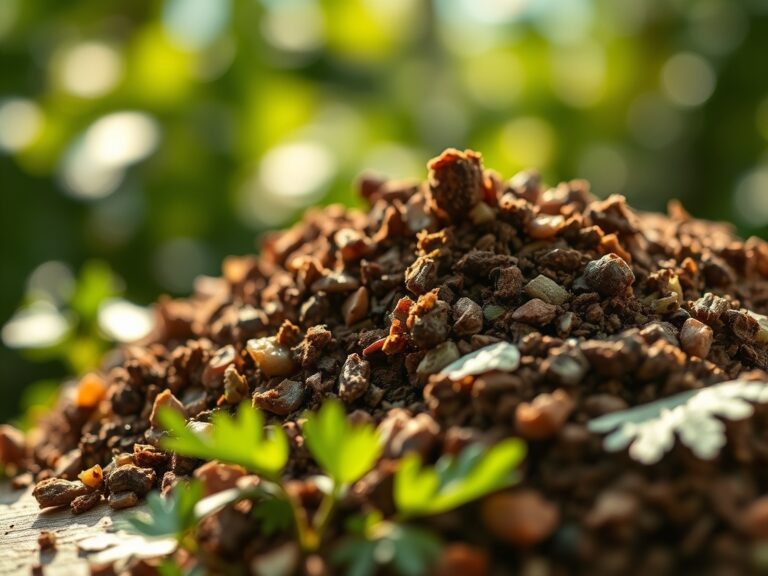
For soil preparation beneath the trellis, apply a 4-4-4 organic fertilizer blend at 2 pounds per 100 square feet. This balanced NPK ratio supports moderate nitrogen uptake without excessive vegetative growth that creates top-heavy vines. Incorporate composted leaf mold to improve cation exchange capacity. Target soil pH between 6.0 and 6.8 for most climbing vegetables.
Mycorrhizal fungi inoculant (Rhizophagus irregularis) applied at planting establishes symbiotic relationships that extend effective root reach by 10 to 40 times. This reduces water stress on vertical crops.
Measure stakes or rebar sections at 18 inches each to anchor the structure. Galvanized steel resists oxidation in moist soil environments for 8 to 12 years.
Timing
Construct bamboo trellises 2 to 3 weeks before the last expected frost date in your hardiness zone. In Zone 5, this window opens mid-April. Zone 7 gardeners begin mid-March. Zone 9 regions proceed in early February.
Bamboo itself tolerates working in cool soil, but delay planting climbing crops until soil temperature reaches 55°F at 4-inch depth. Use a soil thermometer at 8:00 AM for three consecutive days to confirm stable temperatures.
For fall crops, install trellises 10 to 12 weeks before first frost. This allows adequate establishment time for species like pole beans requiring 60 to 70 days to maturity.
Phases
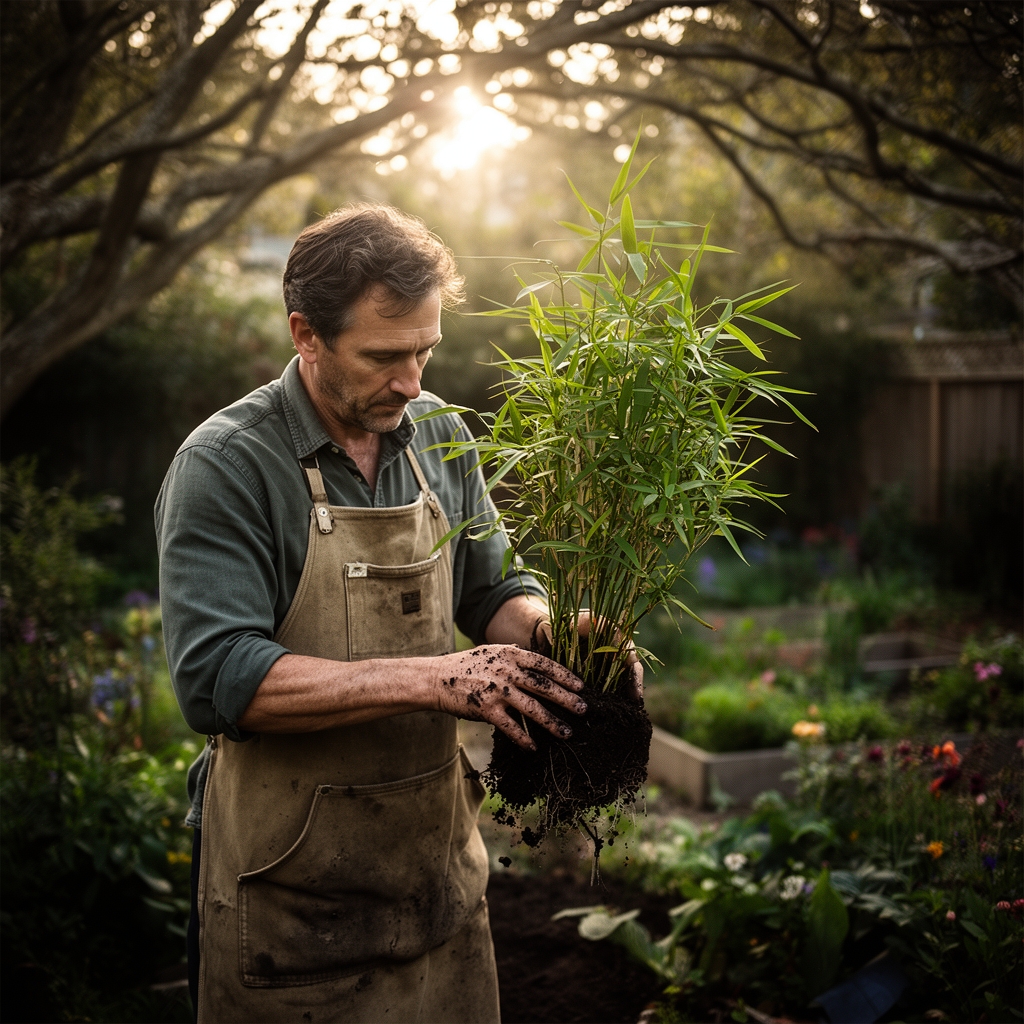
Step 1: Site Selection and Soil Preparation
Choose a location receiving 6 to 8 hours of direct sunlight. South-facing orientations maximize photosynthetically active radiation. Till soil to 8-inch depth and remove perennial weed roots that compete for resources.
Step 2: Setting the Foundation Posts
Drive anchor stakes 12 inches into the ground at 4-foot intervals along the row. These create the vertical supports. For an 8-foot trellis, use 10-foot bamboo poles to accommodate anchoring depth.
Pro-Tip: Angle stakes inward 5 degrees to counteract the outward pull that develops when vines reach full biomass. This prevents structural collapse during windstorms.
Step 3: Installing Vertical Poles
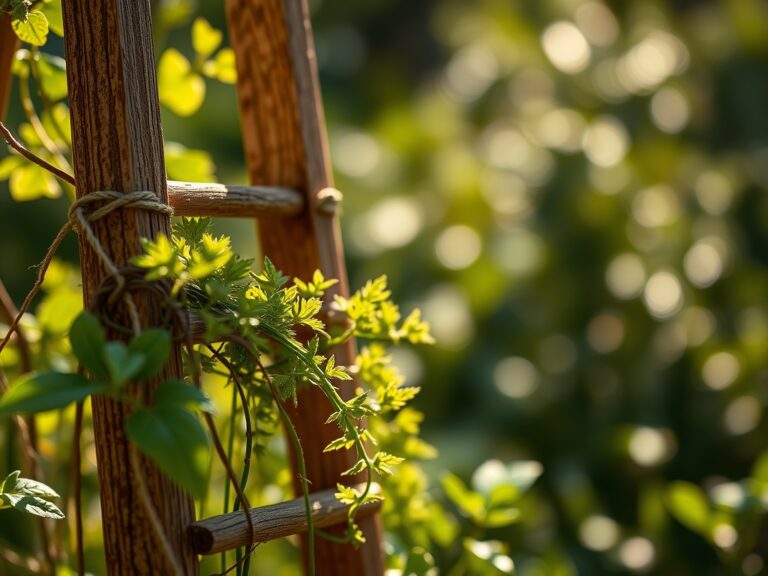
Lash bamboo poles to each anchor stake using a square lashing technique. Wrap jute twine around both pieces four times horizontally, then four times vertically between the poles. This creates a rigid joint that distributes load across both axes.
Step 4: Adding Horizontal Cross-Members
Secure horizontal poles at 18-inch vertical intervals. Begin 12 inches above soil level. These create the climbing grid. Diagonal cross-members from ground level to the second horizontal row add lateral stability.
Pro-Tip: Orient the natural taper of bamboo poles so thicker ends rest at ground level. This maintains structural integrity as diameter decreases with height.
Step 5: Creating the Climbing Grid
Weave jute twine between horizontal members in a 6-inch diamond pattern. This provides attachment points for tendrils and twining stems. Peas utilize this network immediately. Beans require looser 8-inch spacing.
Step 6: Soil Amendment Application
Broadcast granular kelp meal at 1 pound per 50 feet of row. Kelp provides 60+ trace minerals and cytokinins that improve auxin distribution in climbing plants. Water immediately after application to move nutrients into the root zone.
Step 7: Planting
Sow seeds or transplant seedlings 6 inches from the trellis base. Closer placement restricts root development. Space plants according to species requirements: cucumbers at 12 inches, pole beans at 6 inches, indeterminate tomatoes at 24 inches.
Pro-Tip: Apply mycorrhizal inoculant directly to root balls during transplanting. Mix 1 teaspoon of inoculant per plant into the planting hole.
Step 8: Initial Training
Guide young stems toward the trellis using soft plant ties. Avoid wound damage that invites fungal pathogens. Once tendrils make contact, plants self-attach through thigmotropic response.
Troubleshooting
Symptom: Bamboo poles develop longitudinal splits within 4 weeks.
Solution: Harvest bamboo during dormancy (November through February) when moisture content drops below 15%. Cure poles in shade for 6 weeks before construction.
Symptom: Jute bindings slip under load, causing structural sag.
Solution: Wet jute twine before lashing. The fibers swell and contract during drying, creating a tighter hold.
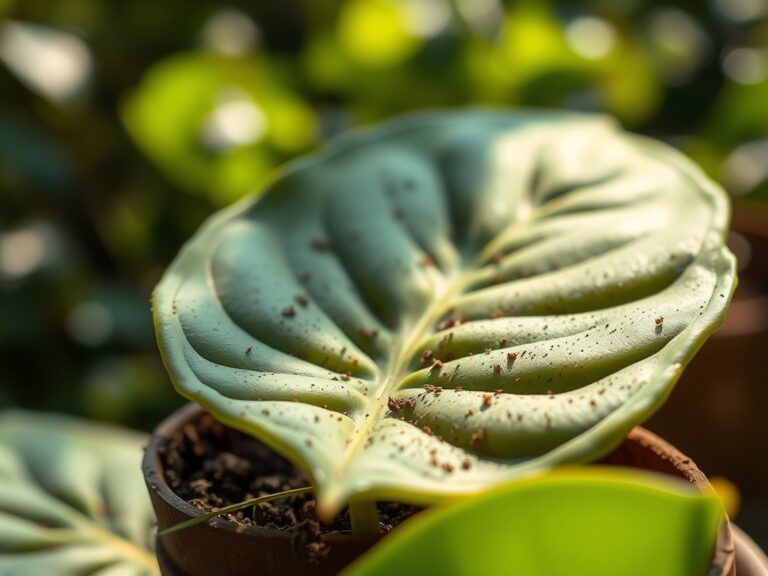
Symptom: Plants exhibit chlorosis in lower leaves despite adequate watering.
Solution: Nitrogen deficiency from insufficient fertilization. Side-dress with blood meal (12-0-0) at 0.5 pounds per 10 feet of row.
Symptom: Wind damage causes entire trellis collapse.
Solution: Install guy wires from top corners to ground anchors set 3 feet outside the structure footprint.
Symptom: Fungal growth appears at lashing joints.
Solution: Ensure adequate air circulation. Space rows 5 feet apart minimum. Remove affected bindings and replace with fresh, dry twine.
Maintenance
Water deeply once per week, delivering 1 inch of moisture measured with a rain gauge. Climbing crops develop extensive root systems but require consistent moisture during flowering and fruit set.
Inspect lashing points every 3 weeks during the growing season. Retighten any connections showing movement. Add supplemental ties where vine weight concentrates on single attachment points.
Apply compost tea at 1:10 dilution ratio every 14 days during active growth. This delivers soluble nutrients and beneficial microbes directly to the root zone.
Prune laterals that develop below the first horizontal support. This directs auxin distribution upward and improves air circulation near the soil surface.
FAQ
How long does a bamboo trellis remain functional?
Properly constructed and maintained bamboo trellises last 3 to 4 seasons. Humid climates accelerate degradation to 2 seasons. Replace poles showing soft spots or structural weakness.
Can treated bamboo extend lifespan?
Boron-based treatments increase durability to 6 seasons without introducing toxic compounds into edible gardens. Avoid creosote or copper-based preservatives near food crops.
What bamboo species work best for trellises?
Phyllostachys aurea (golden bamboo) and Phyllostachys bambusoides (timber bamboo) provide optimal strength-to-weight ratios. Avoid running bamboo species that spread aggressively.
Do bamboo trellises require foundation footings?
Structures under 8 feet tall with properly angled supports do not require concrete footings. Taller installations or those in sandy soils benefit from buried cross-members at the base.
How much weight can bamboo trellises support?
A 1-inch diameter bamboo pole supports 50 to 75 pounds when properly anchored. Distribute heavy fruiting crops like winter squash across multiple vertical supports.