9 Steps to Repair a Broken Rake Handle
The wood fibers splinter against your palm, the grain now a jagged edge where smooth hickory once connected rake head to hand. A broken handle halts spring preparation, but steps for replacing a broken rake handle transform salvage into an afternoon of precision joinery. The tines remain sound, the ferrule intact. Only the shaft has failed, and with proper technique, the tool regains decades of service.
Materials
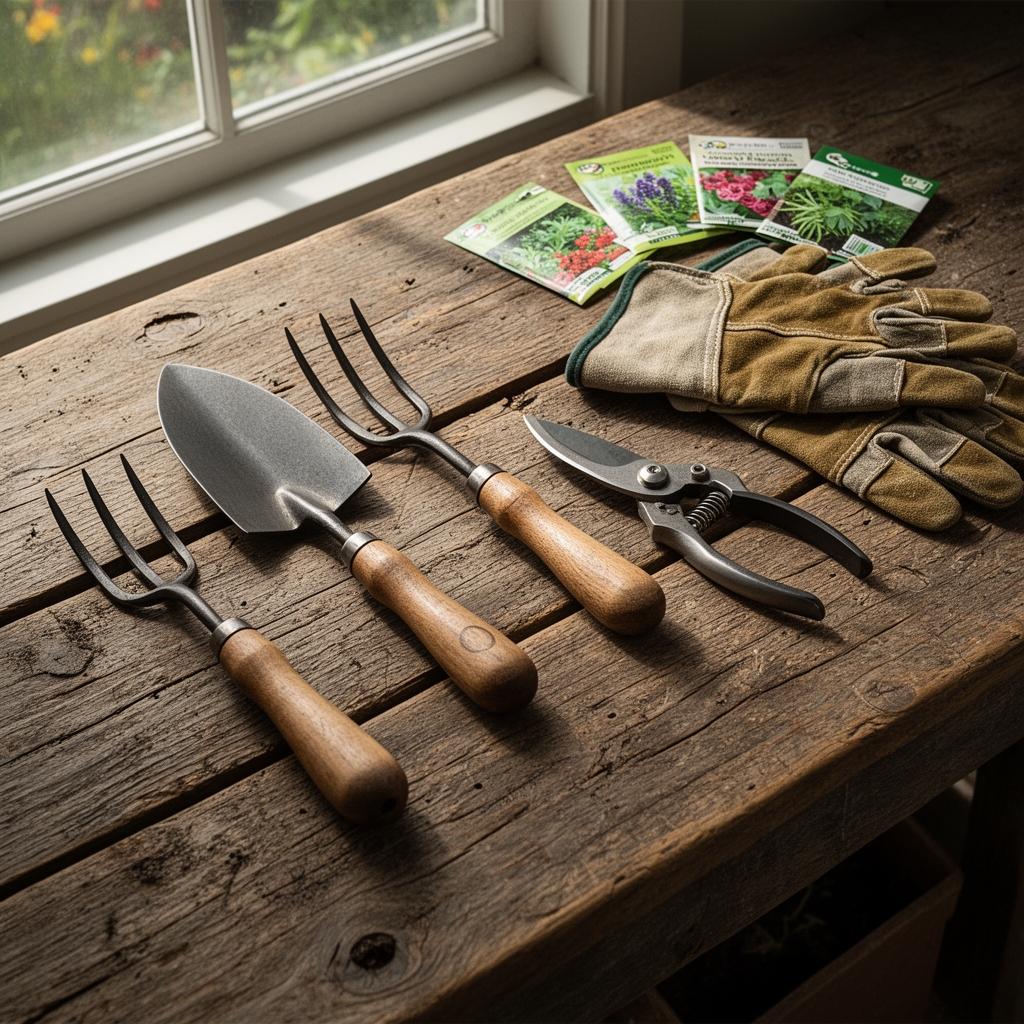
Select a replacement handle crafted from ash or hickory. Diameter should measure 1.25 to 1.5 inches at the ferrule end. The grain must run straight for 36 inches minimum to prevent torsional failure during heavy soil work.
Hardware includes a 0.25-inch steel pin, a rasp or wood file with medium coarseness, and 120-grit sandpaper. Boiled linseed oil (not raw) preserves the wood against moisture infiltration. A drill with bit diameter matching the pin ensures clean penetration without splitting.
While not directly related to NPK values, the analogy holds. A 4-4-4 organic formulation offers balanced nutrition. Similarly, your handle material must balance density, flexibility, and weight. Ash provides a cation exchange capacity equivalent to well-amended loam: it absorbs shock yet transmits force efficiently.
Timing
Execute handle replacement during dormant tool maintenance periods. In USDA Hardiness Zones 3 through 7, late November through February allows indoor workshop time. Zones 8 through 10 permit year-round replacement, though humid conditions above 70 percent relative humidity interfere with linseed oil curing.
Avoid replacement during active growing season peak (May through July in temperate zones). The rushed work invites poor joint fit. Cold weather provides clarity. The wood acclimates to indoor temperature for 48 hours before shaping, preventing future shrinkage within the ferrule.
Phases

Removal
Extract the broken handle stub from the ferrule socket. If the wood has swollen, apply penetrating oil to the interior junction. Wait 20 minutes. Use a drill bit 0.125 inches smaller than the stub diameter to bore out the center, then collapse the remaining shell with a chisel. Work from the ferrule opening downward, never prying outward against the metal.
Pro-Tip: Heat the ferrule with a propane torch for 15 seconds. Metal expands faster than wood, creating clearance for extraction. Avoid open flame contact beyond 30 seconds to prevent temper loss in the steel.
Shaping
Measure the ferrule socket depth with a ruler. Mark that depth plus 0.5 inches on the new handle's tapered end. Test-fit every 1 inch of material removal. The handle must enter with firm hand pressure but resist pull-out force exceeding 40 pounds.
Rasp the taper in quarter rotations to maintain symmetry. Check diameter with calipers at 2-inch intervals. The final 3 inches should taper from full diameter to 0.125 inches under socket diameter at insertion point.
Pro-Tip: Mimic auxin distribution patterns. Apical dominance in plant growth demands precision at the terminal bud. Your handle taper demands equal precision at the terminal insertion point. A wobbling joint fails like a stem with compromised vascular continuity.
Assembly
Drive the shaped handle into the ferrule until wood compresses slightly at the socket lip. Drill the pin hole perpendicular to the grain, penetrating both ferrule walls and handle core. Insert the steel pin. File flush on both sides.
Apply boiled linseed oil in three coats over three days. Each coat penetrates deeper as solvent evaporates. The finish polymerizes into a moisture barrier comparable to plant cuticle wax, reducing water uptake by 60 percent.
Pro-Tip: Align the pin hole to intersect wood rays, not parallel them. Ray cells provide lateral strength. A pin crossing rays engages structural elements similar to how mycorrhizal fungi colonize root cortex cells for nutrient exchange.
Troubleshooting
Symptom: Handle splits during insertion.
Solution: Reduce taper angle. Remove 0.0625 inches additional diameter at the insertion tip. Wood compresses axially but splits radially under excessive wedge force.
Symptom: Handle rotates within ferrule during use.
Solution: Insufficient taper depth. Remove handle, extend taper 1 additional inch, reshape to tighter tolerance.
Symptom: Pin hole causes longitudinal crack.
Solution: Drill pilot hole 0.0625 inches smaller than pin diameter. Ream to final size. Pre-drilling prevents hydraulic pressure that propagates cracks along grain boundaries.
Symptom: Linseed oil remains tacky after 72 hours.
Solution: Applied raw linseed oil instead of boiled. Strip with mineral spirits. Reapply boiled linseed oil with metallic driers that catalyze oxidation polymerization.
Maintenance
Inspect the pin and ferrule junction every 40 hours of use. Retighten or replace pins showing 0.03125 inches of play. Store tools in conditions between 40 and 60 percent relative humidity.
Apply fresh linseed oil annually before spring soil preparation. One coat suffices for maintenance. Sand lightly with 220-grit paper to open grain before application.
Avoid leaning rakes on concrete. Concrete wicks moisture through capillary action, concentrating at the handle base. Hang tools vertically or rest on wooden pegs.
FAQ
How long does a replaced handle last?
Properly fitted ash or hickory handles endure 15 to 25 years under residential use. Commercial applications reduce lifespan to 8 years.
Can I use softwood like pine?
No. Softwood grain compresses irreversibly under load. Hardwood species maintain structural integrity through repeated stress cycles.
What diameter pin works best?
0.25-inch steel rod balances shear strength against wood displacement. Smaller diameters shear under load. Larger diameters split the handle.
Should I use epoxy instead of a friction fit?
No. Wood expands and contracts seasonally. Rigid adhesive bonds crack at the interface. Mechanical friction accommodates dimensional change.
How tight should the final fit feel?
The handle should require a rubber mallet and three firm strikes to seat fully. Hand pressure alone indicates insufficient interference fit.