8 Steps to Prepare a Rock Garden Site
The first handful of coarse granite gravel, still cool from morning shade, signals the beginning of work that will endure decades. Preparing a rock garden with drought-tolerant plants demands precision in site assessment, drainage architecture, and substrate chemistry. The gardener who skips foundation steps inherits compacted clay, waterlogged crowns, and the slow death of alpines that evolved on scree slopes at 8,000 feet. This guide translates high-altitude survival strategies into eight executable steps that transform suburban hardpan into a xerophytic ecosystem.
Materials
Substrate Components (pH 6.0-7.5)
Crushed granite or decomposed granite provides the mineral backbone. Use 3/8-inch to 3/4-inch grade. Turkey grit (insoluble granite grit sold for poultry digestion) serves smaller alpine plantings. Avoid limestone in areas with naturally acidic soils below pH 5.5 unless targeting calciphiles like Dianthus or Saxifraga.
Organic Amendments (NPK 4-4-4 or Lower)
Aged compost at no more than 15% by volume prevents nitrogen excess. Excessive nitrogen forces lush growth vulnerable to crown rot. Well-composted pine bark offers slow-release nutrients and improves cation exchange capacity without water retention. Bone meal (0-10-0) and kelp meal (1-0.5-2) address phosphorus and trace minerals.
Structural Elements
Boulders weighing 50-200 pounds anchor visual composition. Sedimentary stone (sandstone, limestone) weathers faster than igneous (granite, basalt) but offers more planting pockets. Avoid rounded river rock. Angular stone creates the fissures and microclimates that protect roots from temperature extremes.
Amendments for Alkalinity Control
Elemental sulfur lowers pH at 1 pound per 100 square feet to drop one full pH unit. Apply six months before planting for microbial conversion to sulfuric acid. Agricultural gypsum (calcium sulfate) improves clay structure without altering pH.
Timing
Hardiness Zones 5-7
Prepare sites in late summer (August-September) for spring planting. Fall excavation allows winter freeze-thaw cycles to break remaining clay clods. Plant container-grown drought-tolerant perennials four to six weeks before first frost (typically mid-September to mid-October). This window permits root establishment before dormancy without triggering top growth.
Hardiness Zones 8-10
Begin site work in October when soil temperatures drop below 70°F. Plant from November through February to exploit winter rainfall. Avoid June through September installation. Transplant shock combines lethally with heat stress in these zones.
Frost-Date Calculus
Consult USDA Plant Hardiness Zone maps and local extension offices for 50% frost probability dates. Apply 3 inches of coarse mulch after ground freezes in Zones 3-5 to prevent frost heaving, which exposes alpine root systems.
Phases
Step 1: Site Assessment and Excavation
Mark a 200-square-foot minimum area. Full sun (minimum six hours) remains non-negotiable for most drought-tolerant species. Excavate to 18-inch depth. Remove all organic topsoil. The goal is mineral subsoil with zero water-holding capacity.
Pro-Tip: Test subsoil drainage by filling the excavated area with water. If water remains after 12 hours, install a 4-inch perforated drain tile at the base sloping 1 inch per 8 feet toward a dry well or downslope exit.
Step 2: Base Layer Construction
Install 6 inches of 1.5-inch crushed stone. This layer functions as a French drain, channeling water laterally and downward. Compact lightly with a hand tamper. Do not use plate compactors. Over-compaction creates an impermeable pan.
Step 3: Growing Medium Blending
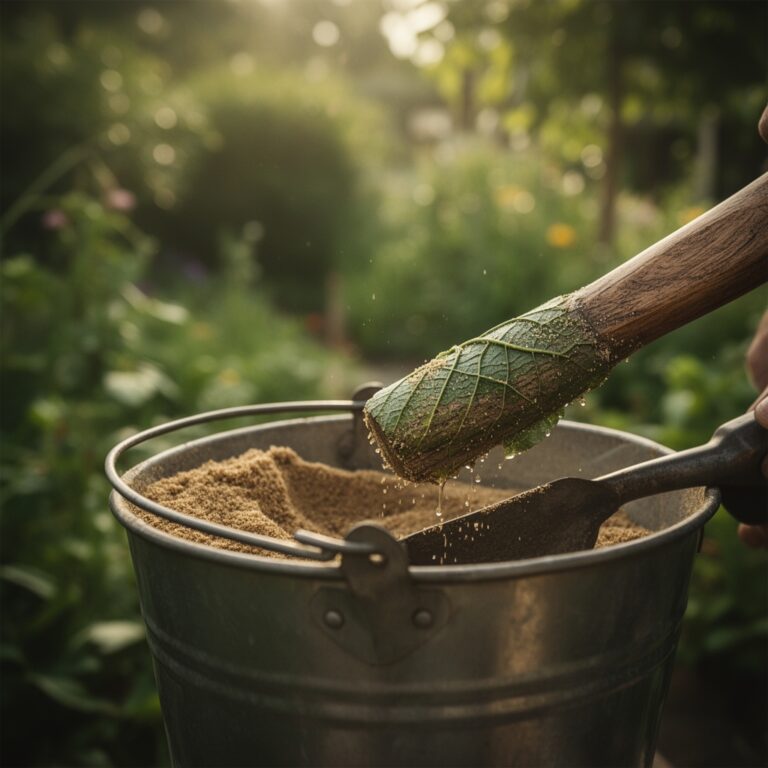
Combine 60% crushed granite (3/8-inch), 25% coarse sand (avoid mason sand, which compacts), and 15% aged compost. Mix in a wheelbarrow or on a tarp. Add bone meal at 2 pounds per cubic yard for phosphorus. This ratio mimics scree: rapid drainage with minimal fertility.
Pro-Tip: Inoculate the growing medium with mycorrhizal fungi (Glomus intraradices). Apply at 1 ounce per 10 square feet mixed into the top 4 inches. Mycorrhizae extend effective root surface area by 100 to 1,000 times, critical for nutrient uptake in low-fertility substrates.
Step 4: Boulder Placement
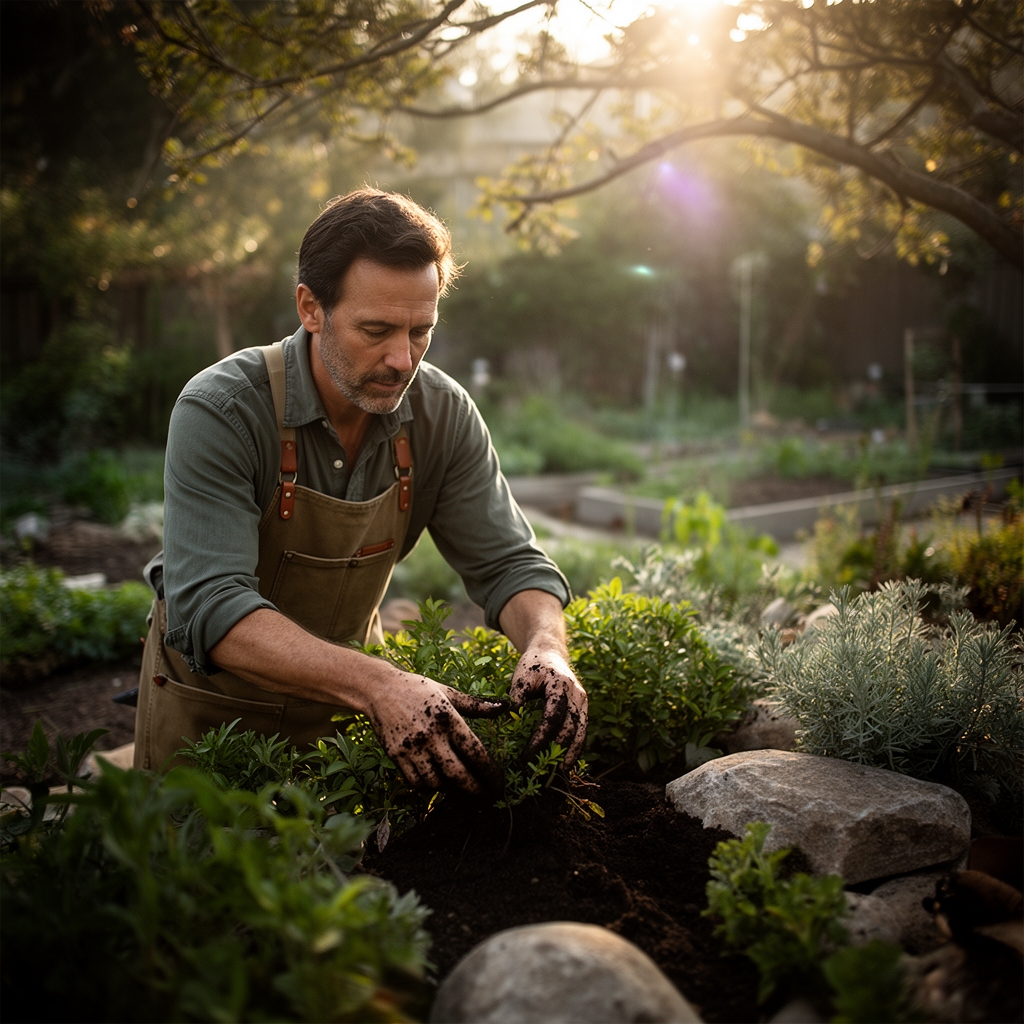
Bury one-third of each boulder's mass. Tilt stones backward 10-15 degrees to channel rain toward root zones. Cluster three to five boulders in groupings, avoiding linear arrangements. Leave irregular gaps (8-18 inches) for planting pockets.
Step 5: Planting Pocket Preparation
Fill spaces between boulders with growing medium. Create raised mounds 2-4 inches above grade around each boulder's base. This elevation prevents water accumulation at plant crowns during spring snowmelt or summer monsoons.
Pro-Tip: Add 20% perlite or pumice to pockets intended for woolly-leaved species (Verbascum, Salvia). These plants are extremely susceptible to foliar fungal diseases in high humidity.
Step 6: Transplanting Technique
Remove plants from containers. Tease roots gently to eliminate circling patterns caused by pot-bound growth. Position crown (where stem meets roots) 1 inch above surrounding medium. Backfill with uncompacted medium. Water once thoroughly to eliminate air pockets. Do not water again for seven days unless plants wilt.
Step 7: Topdressing Application
Apply 1-2 inches of 3/8-inch crushed granite or pea gravel around all plants. Keep mulch 2 inches away from crowns. This layer reflects heat, suppresses weeds, and prevents soil crusting. It also reduces rain splash, which spreads soilborne pathogens.
Pro-Tip: In Zones 7-10, use light-colored stone (white granite, marble chips) to reflect summer heat and lower soil surface temperatures by 8-12°F.
Step 8: Establishment Watering
Water every five to seven days for the first six weeks. Apply 0.5 inches per session measured with a rain gauge. Transition to every 10-14 days through the first year. Drought-tolerant plants develop deep roots only when surface moisture becomes scarce. Overwatering trains shallow, heat-vulnerable root systems.
Troubleshooting
Symptom: Crown Rot (blackened stem base, plant collapse)
Solution: Excessive moisture. Elevate affected plants on pure gravel mounds. Reduce watering to once monthly. Remove and destroy infected plants. Drench surrounding soil with Bacillus subtilis biological fungicide.
Symptom: Chlorosis (yellowing leaves, green veins)
Solution: Iron deficiency common in alkaline soils above pH 7.5. Apply chelated iron (Fe-EDDHA) at 1 tablespoon per gallon as foliar spray. Acidify soil with elemental sulfur for long-term correction.
Symptom: Leggy Growth (elongated stems, sparse foliage)
Solution: Insufficient light or excessive nitrogen. Transplant to full sun. Cease fertilization. Prune stems by one-third to stimulate auxin redistribution and lateral branching.
Symptom: Aphid Infestation (clustered on new growth)
Solution: Spray with insecticidal soap (potassium salts of fatty acids) at 2% solution. Apply in early morning. Repeat every five days for three applications. Encourage predatory insects by planting Achillea or Eriogonum nearby.
Symptom: Winter Desiccation (brown foliage on evergreen species)
Solution: Wind and sun exposure without available soil moisture. Water deeply in November before ground freezes. Install burlap windbreaks on north and west exposures. Apply anti-desiccant spray (polymer wax emulsion) to evergreen foliage in December.
Maintenance
First-Year Watering: 0.5 inches every 10-14 days from April through October in Zones 5-7. Reduce frequency by 50% in Zones 8-10 where winter rain provides base moisture.
Established Watering (Year Two Onward): Supplement only during droughts exceeding 30 days without rain. Apply 1 inch when soil is dry at 6-inch depth.
Fertilization: None required in most cases. If growth stalls, apply slow-release 5-10-10 granular fertilizer at 0.5 pounds per 100 square feet in early April. Do not fertilize after June 15. Late-season nitrogen reduces cold hardiness.
Pruning: Remove spent flowers to prevent self-sowing in aggressive species (Centranthus, Verbascum). Cut back herbaceous perennials to 2-inch stubs after first hard frost. Leave ornamental grasses standing until March for winter structure and seed source for birds.
Weed Control: Hand-pull weeds before they set seed. The low-fertility substrate naturally discourages most aggressive weeds. Avoid pre-emergent herbicides, which damage mycorrhizal networks.
Top-Dressing Renewal: Add 0.5 inches of fresh gravel mulch each spring as existing layer settles and degrades. Inspect and re-set any shifted boulders after freeze-thaw cycles.
FAQ
What plants thrive in rock gardens?
Sedum, Sempervivum, Delosperma, Penstemon, Thymus, Dianthus, Armeria, Aubrieta, and dwarf conifers (Juniperus, Pinus mugo). Select species native to alpine, Mediterranean, or steppe climates with summer rainfall below 15 inches.
How deep should drainage extend?
Eighteen inches minimum in clay soils. Twenty-four inches in areas with seasonal water tables within 3 feet of surface. Shallow excavations (less than 12 inches) fail in heavy soils during spring melt.
Can I build a rock garden in shade?
Partial shade (four hours of sun) supports Saxifraga, Ramonda, and ferns. Full shade requires woodland species incompatible with rock garden drainage. Alpines require high light intensity for compact growth.
When do drought-tolerant plants need water?
During establishment (first 12 months) and droughts exceeding 30 days. Test soil moisture at root depth. If dry 6 inches down, apply 1 inch of water. Wilting indicates stress, but slight leaf curling at midday is normal adaptation.
How do I prevent weeds without chemicals?
Install landscape fabric below the gravel base layer only in severely weed-infested sites. Hand-weeding remains most effective. The low-nutrient environment and thick gravel mulch suppress most annual weeds naturally. Perennial weeds require removal during excavation.